What is Obsidian
First off check out the Obsidian website and read their own documentation and marketing content.
In a nutshell, Obsidian is a personal knowledge management and note-taking application that uses plain-ole Markdown (.md) text files stored locally on your device. Its key features include a powerful linking system to connect notes, a customizable interface, SQL-like access to all content and properties, as well as a focus on user ownership and data control. All of this allows you to build a “second brain”. It can be extended to do many additional things using a very large ecosphere of plugins and services (most of which are actually free - FLOSS).
Working with Obsidian
My current layout is fairly simple. I have a vault with the following directory structure (the relevant parts at least):
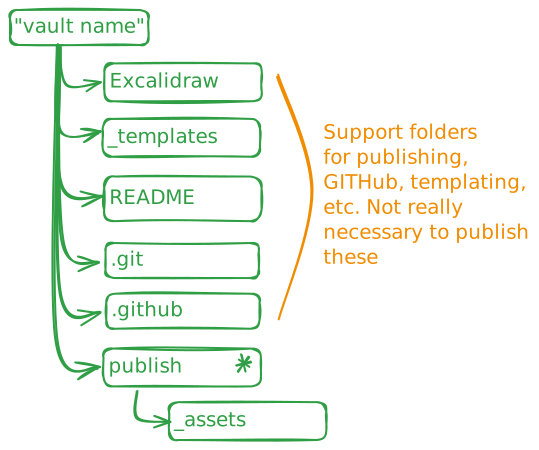
Only the files/directories NOT listed in the .gitignore file get published. This allows me to keep my templates and source files (such as messy and large Excalidraw files) out of the journal publishing - this may be particularly important for private notes I leave myself in my dayly folder.
Publishing to GitHub
I am using GitHub-Quartz-Obsidian to automatically publish my content to a public audience on a huge platform, complete with SSL and versioning control.
Links
- Obsidian Plugins
- Obsidian Help
- Timeblocking
- Time date Format
- Organizing Notes
- GitHub-Quartz-Obsidian
Tasks:
- Update obsidian layout to reflect most recent move to remove the publish folder and implement dataview-publisher ✅ 2025-10-28